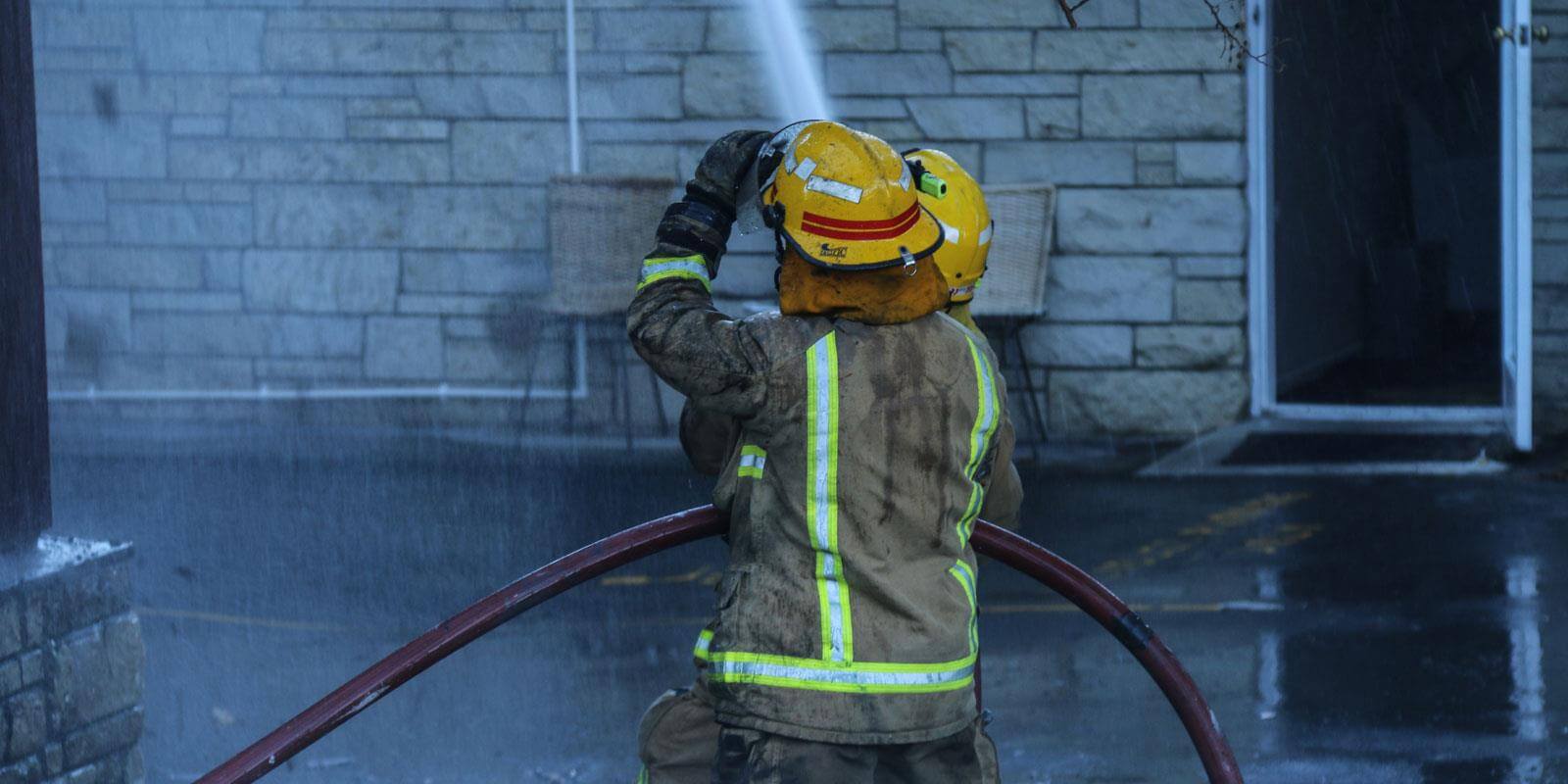
Approximately 2,000 NZPFU members will strike for one full hour from 12 noon today.
Notices have also been issued for the 12th and 19th December 2025.
These strikes could be avoided if FENZ agreed to meet and progress the bargaining. The notified strikes for the next two weeks will be dependent on FENZ’s attitude to getting bargaining going again.
Yesterday, the Employment Relations Authority issued a determination that sends the parties to facilitated bargaining. What that process looks like and when it will happen is yet to be known. What we do know, is that FENZ refusing to bargain while waiting for this Decision, did unnecessarily delay any progress we could make. There was no impediment to bargaining since we last met on the 18th November apart from their stubbornness.
The only pathway to settlement is to meet and continue to work through our differences.
FENZ’s refusal to bargain while its application was making its way through the ERA process occurred simultaneously with FENZ proposing to slash 160 jobs in a restructure. That restructure affects the jobs of NZPFU members covered by the bargaining, and various claims in bargaining. We have more than 70 members who will see their positions disestablished and have to contest for new established more generic positions.
The restructure does not cut firefighter positions directly but has significant and detrimental impacts on training and future recruitment of career firefighters.
The NZPFU and PSA have jointly filed an urgent application in the Employment Relations Authority seeking an order requiring FENZ to comply with the consultation provisions in the unions’ respective collective agreements. That matter is being mediated on Thursday the 11th December 2025.
The NZPFU members are fighting for New Zealand’s fire service.
1. FENZ claims it is now, and has been, spending $20 million a year on fleet and appliances. NOT ONE NEW FIRE APPLIANCE HAS REACHED A CAREER FIRE STATION IN 8 YEARS!
2. FENZ claims that there are 78 fire appliances on order including 28 fire pumps being delivered by Christmas to fire stations.
- Most of those fire appliances will have chassis that are out of warranty before they reach the station as FENZ left them in a paddock for years waiting to be built into fire appliances.
- Only 34 of those fire appliances are destined for career fire stations. With many trucks aged 15 to 30 years old, these new trucks will be welcomed but will not go anywhere near addressing the dire state of the aging and failing fleet.
- FENZ reduced the size of storage on the appliances without checking necessary life-saving equipment could be stowed. As a result, those appliances destined to replace heavy rescue appliances can’t replace them because the gear does not fit. That has delayed and affected the roll out. FENZ has now sent one of those trucks to three different regions in an attempt to get the gear to fit – FENZ is blaming firefighters rather than addressing the fact they caused the problem.
3. In 2025 there are fewer reliable working fire appliances and about the same number of career firefighters that New Zealand had in 1990. In those 35 years, the population has increased by 1.8 million with metro Auckland doubling, yet the number of career firefighters has largely remained static with fewer aerial appliances and some fire trucks bought in the 1990s and early 2000’s still being responded.
4. In 2020, FENZ said it was making an urgent interim order for aerial appliances to meet the dire need. That order was not made until
2024 so those appliances won’t arrive until 2026 at the earliest. This is not the full compliment of aerial appliances needed – it
was supposed to bridge a gap – but no others have been ordered. There is no plan to get back to even 1990 levels.
5. Career firefighters constitute 13.5% of FENZ’s claimed firefighting force but protect approximately 70% of the population responding to about 70% of all structure fires, 40% of all vegetation fires, 87% of all line rescues, 77% of all hazardous substance incidents and 75% of marine incidents. Yet not one new fire appliance in 8 years!
6. While numbers of career firefighters has largely stagnated, the funding of FENZ has almost doubled. In 2016 the New Zealand Fire Service received $393.3 million from the fire service with a total revenue of $417.7. In 2024, FENZ recorded $749.3 million in revenue.
7. FENZ is failing its own response standards, so what does the Senior Leadership team do? They weaken those response standards.
- Response times are critical to the protection of the community. The quicker a trained and resourced fire crew arrives, the more chances they have of safely performing rescue and saving life and property. The later the crew/s arrival, the more limited the options are and the more dangerous the fire or incident becomes for the firefighters and the affected community.
- Prior to the 2017 establishment of FENZ, the standard was a 7-minute 30-second response time to be achieved 90% of the time. In 2025, the Standard is 8-minutes response time to be achieved 80% of the time.
- The failure to meet response times is due to changes in the response areas, for example, traffic and increased population. In recent years it is also due to lack of staffing closing stations or resulting in FENZ not meeting minimum crew standards. The failing trucks also impact on response if they breakdown at station or on the way which is not uncommon anymore.
8. Robust research has exposed a high incidence of mental health issues for those working in FENZ’s 111 emergency dispatch centres. One of the key mitigations is to increase staff numbers to ensure staff are not over-worked including working extraordinary overtime, that they can have their breaks for meals, rest and respite including support post a challenging event. In bargaining both FENZ and the NZPFU had claims to increase dispatcher numbers. FENZ did not include an increase in their rejected offer in June 2025. Due to the insufficient staffing it is not uncommon for one of the three (Auckland, Wellington and Christchurch) dispatch centres to be closed leaving New Zealand communities vulnerable relying on two centres to dispatch to the whole country.
9. It is internationally accepted that firefighters have high levels of occupational cancer. In 2022, the Parties agreed to a health monitoring programme for early detection of known occupational diseases. The Union organised providers for that testing and FENZ agreed to reimburse $250 a year for that testing. In most centres that does not cover the costs of the tests so the Union is seeking reimbursement of actual costs. Without that reimbursement firefighters cannot be tested annually which undermines the programme’s benefits. FENZ only had to organise the testing for the recruits during their 13-week recruit course – three years later and nothing has been done.
10. FENZ knows of a possible risk that Auckland firefighters are using Breathing Apparatus Cylinders contaminated with asbestos. Asbestos was found in the compressor and a storage tank that was used to fill firefighters’ BA cylinders. FENZ “lost” the BA cylinders that were supposed to be tested at the same time. The compressor has not been in use since 2023 but the cylinders the firefighters use today are the same cylinders that were filled from that compressor. Those cylinders are close to end of life and the servicing is increasingly difficult as parts are becoming obsolete. The easy fix is to bring the replacement of those cylinders forward to alleviate any risk of firefighters breathing in asbestos through their BA which is used for the very purpose of preventing breathing in asbestos and other carcinogens.
11. As a result of the 2022 settlement it was “agreed in principle” that the ratio of firefighters had to increase to address the lack of staffing closing fire stations and having fire appliances riding short which is dangerous for all those responding to the incident ground. FENZ says it is still considering the increase but in reality they are driving down firefighter numbers. The January 2025 recruit course has been cancelled and April is in jeopardy. Auckland management have told firefighters they are intending to reduce the total number of firefighters claiming current establishment numbers were not approved by the National Commander.
12. FENZ repeatedly distorts the pay rates of firefighters. Here are the facts:
- NZPFU members have not had a pay increase since 1 July 2023.
- Firefighters are paid for 42 hour weeks in their base wages.
- A trainee firefighter is paid $1086.11 a week gross.
- A Qualified Firefighter (at least 2 years’ experience and qualified) base wages are between $1396.43 a week (if not a driver) through to $1447.34 a week gross. Some firefighters remain at this rank.
- A Senior Firefighter (the largest proportion of all Firefighters and Officers) 4-10 years’ experience earns a total weekly wage between $1551.59 a week to $1602.50 a week gross. That is $80,682.68 gross for reportedly one of the most dangerous professions.
- A Station Officer on appointment earns between $1766.63 and $1796.80 a week gross.
- A Senior Station Officer (which can be in command of multiple crews and responsible for decisions at significant, complex and long events) is paid between $2057.61 and 2087.78 a week gross.
For those wages, firefighters put their health, safety, and life on the line in response. They know they have high risk of occupational cancer and work-related mental health issues.
- In comparison, FENZ recently advertised a project manager position - a desk job with no safety risk - with a salary of $136,000.
- Almost all other FENZ staff received a pay increase last year in 2024.
- FENZ’s senior leadership group are paid salaries of between $300,000 and $480,000.
Come out and support your NZPFU members in their fight to save New Zealand’s fire service.
For details on where they will be striking and how you can become involved go to: https://direemergency.nz/events/
In unity,
Wattie Watson
National Secretary